%20(1).png)
ChildBuilders ABA is a pediatric Applied Behavior Analysis (ABA) therapy provider serving families across Rhode Island, Massachusetts, and New Hampshire. Founded on principles of compassion and evidence-based care, the organization offers personalized ABA therapy for children with autism spectrum disorder through home-based services, school-based interventions, social skills groups, and comprehensive parent training programs. With a team of Board-Certified Behavior Analysts (BCBAs) and Registered Behavior Technicians (RBTs), ChildBuilders ABA specializes in creating individualized treatment plans that foster independence, communication skills, and social development.
To create a deeply empathetic, trust-building digital platform for ChildBuilders ABA that speaks directly to the emotional journey of parents navigating an autism diagnosis. The goal was to establish a warm, reassuring online presence that reduced the overwhelming complexity of seeking ABA therapy, positioned ChildBuilders as a partner (not just a provider), and created clear pathways from anxiety to action—all while maintaining the medical credibility and professionalism required in healthcare marketing.
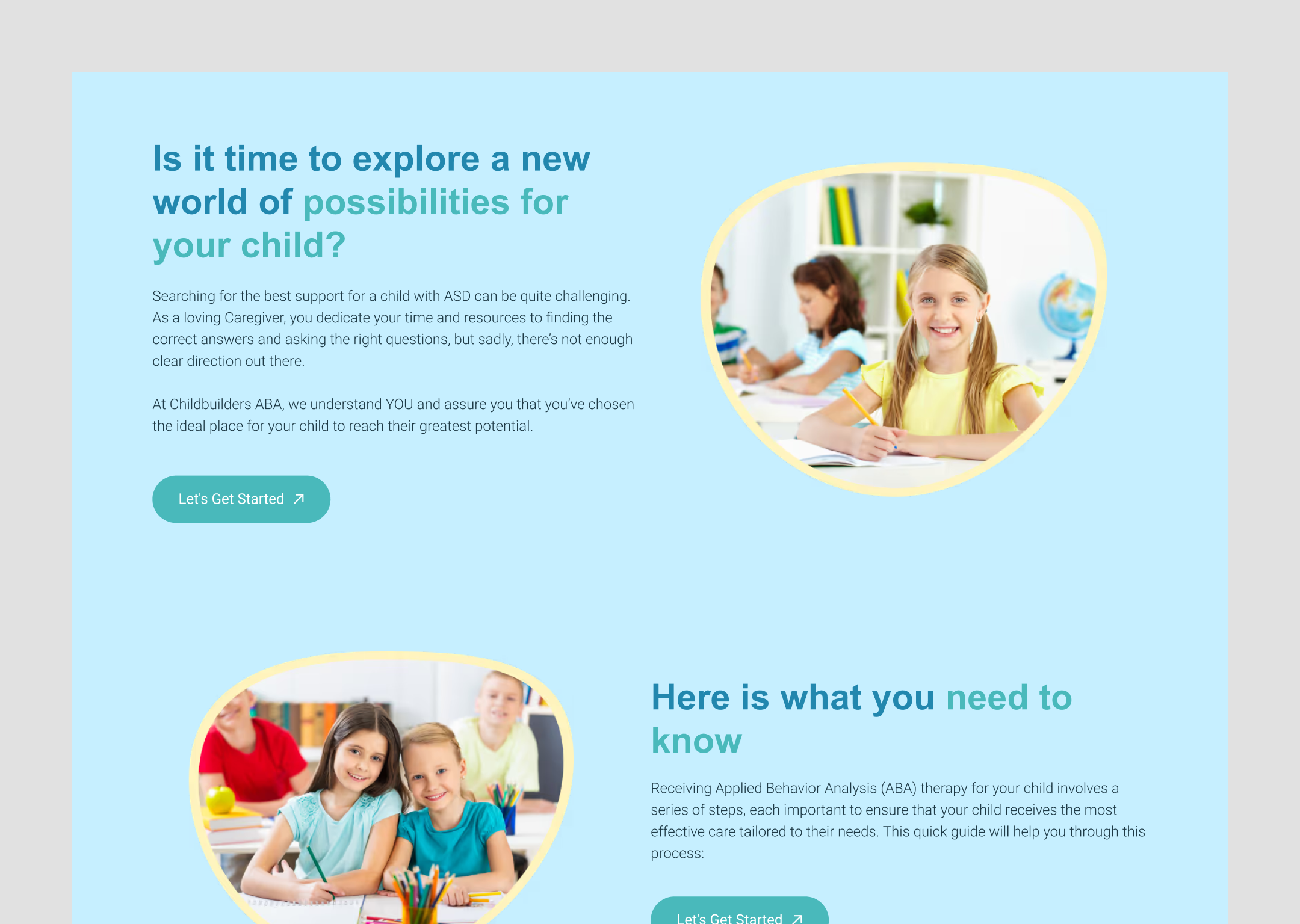
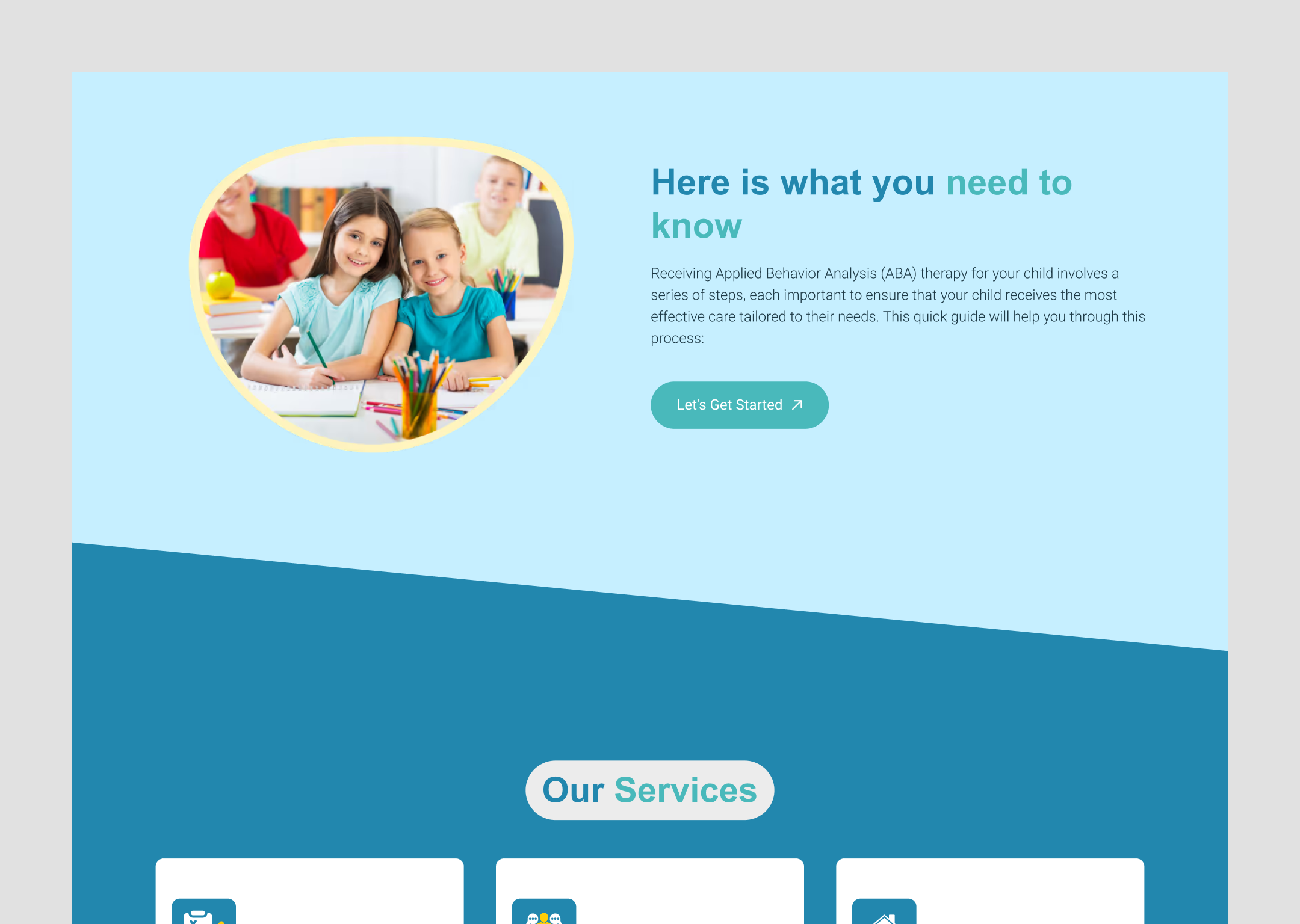
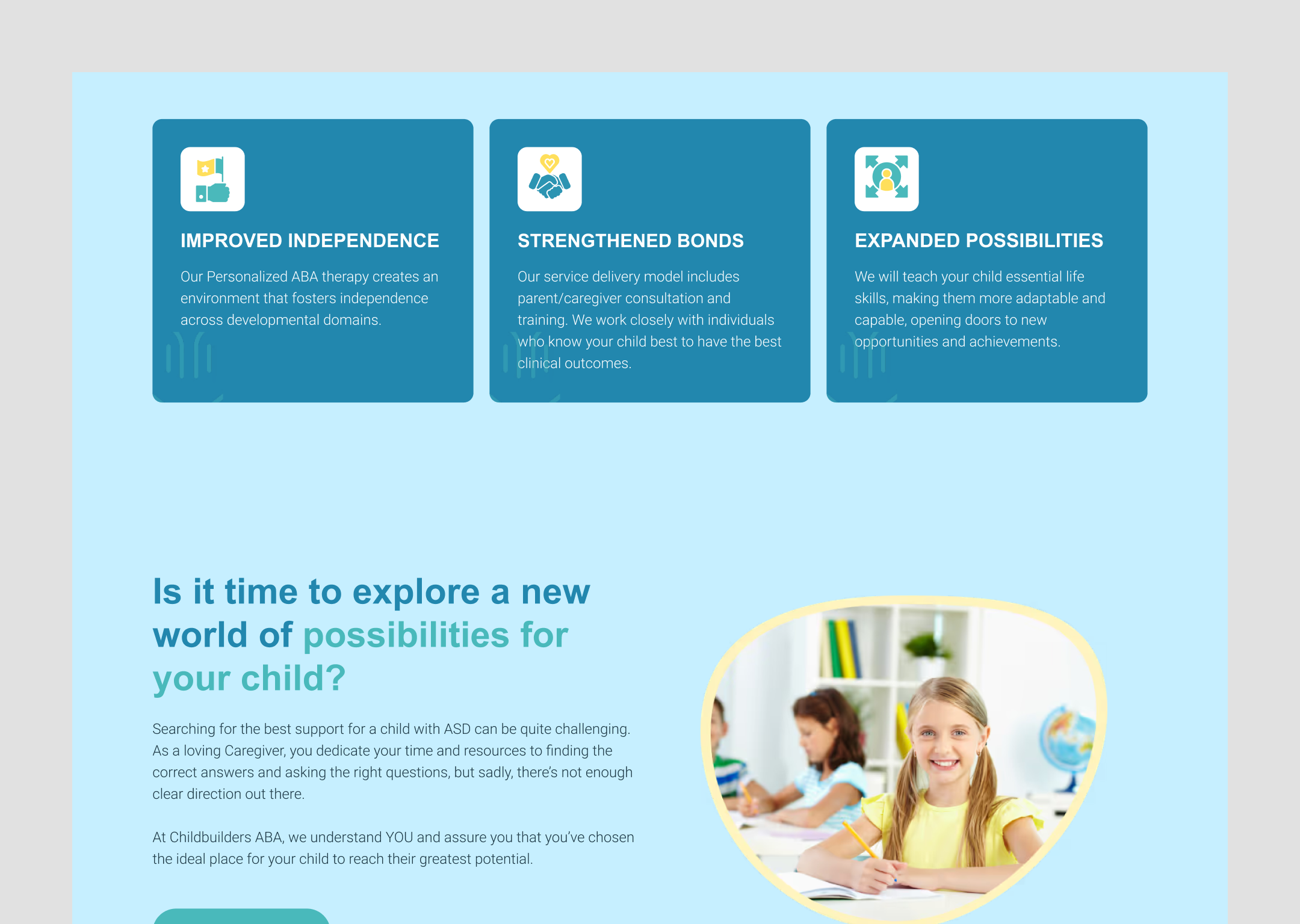
The project began with extensive research into the parent experience of seeking ABA services. We conducted interviews and analyzed parent forums to understand the emotional state of families at the moment they begin searching for help. A critical insight emerged: parents weren't just looking for qualified therapists—they were looking for someone who understood their fear, confusion, and hope. This drove our strategy to lead with empathy first, expertise second, creating a digital experience that felt like a supportive conversation rather than a clinical transaction.
We restructured the entire site narrative to mirror the emotional journey of parents, meeting them where they were and gently guiding them toward confidence and action.
Empathy-First Messaging: The core content strategy was built on deep emotional intelligence. Rather than opening with credentials or services, we led with validation: "Searching for the best support for a child with ASD can be quite challenging. As a loving Caregiver, you dedicate your time and resources to finding the correct answers and asking the right questions, but sadly, there's not enough clear direction out there." This acknowledgment of struggle was strategic—it immediately signaled to parents that ChildBuilders understood their experience.
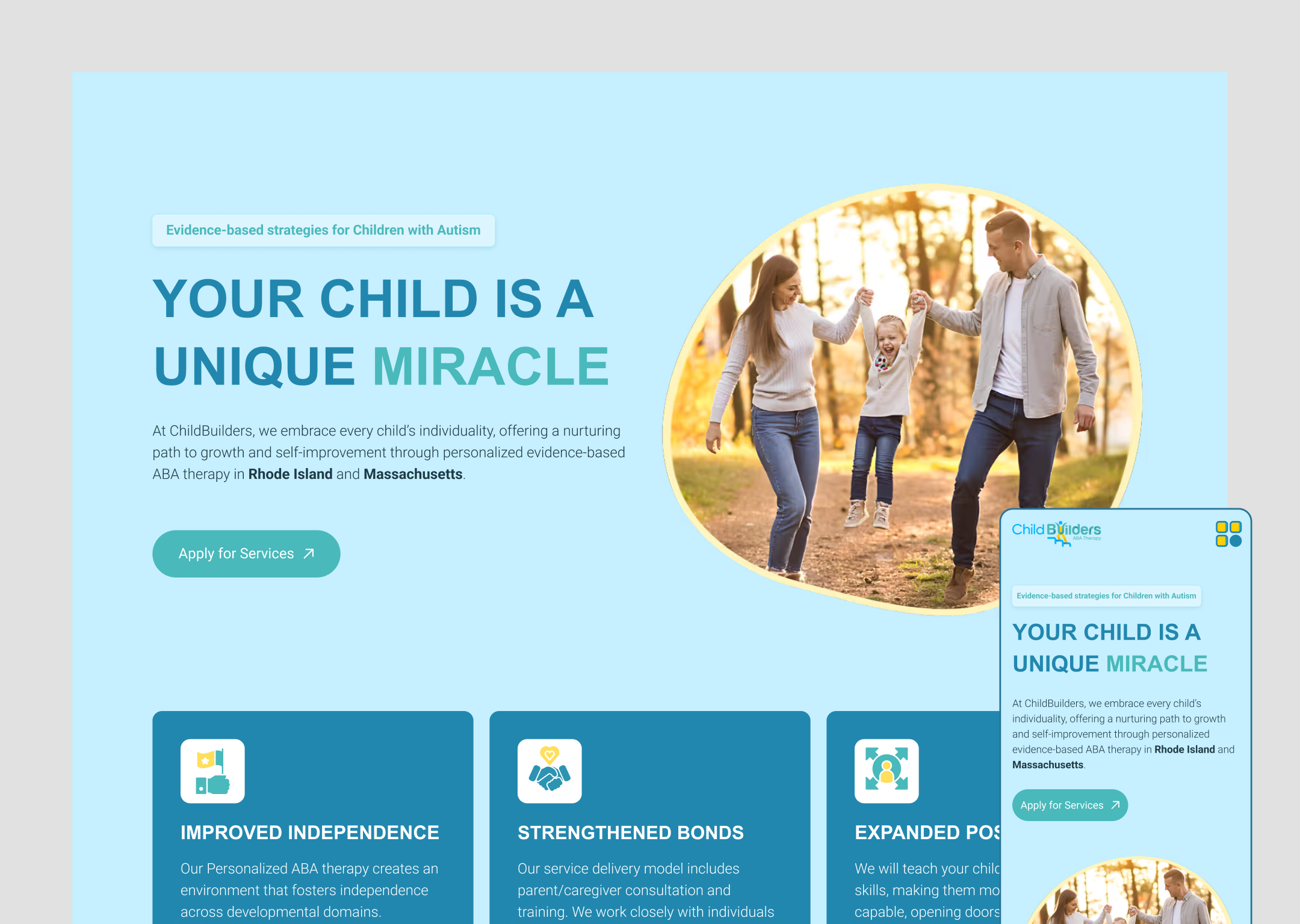
Tone and Language: The content voice was defined as Warm, Reassuring, and Hope-Focused. We consciously avoided clinical detachment and institutional language, opting instead for a deeply personal, almost intimate tone that treated each family as individuals, not cases. The headline "Your Child is a Unique Miracle" wasn't marketing hyperbole—it was a deliberate emotional anchor designed to affirm what every parent feels but rarely hears from medical providers.
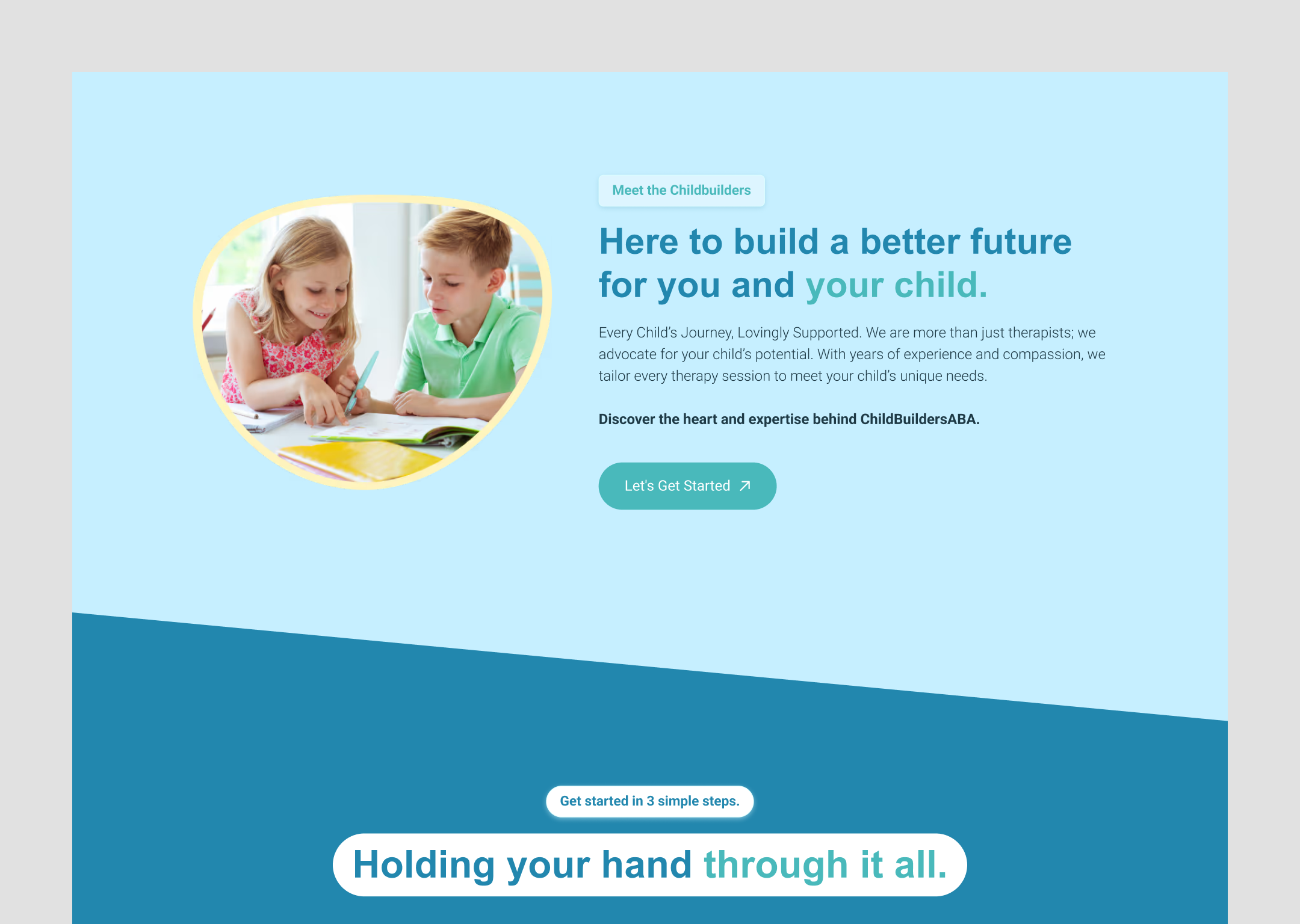
Family-Centric Value Proposition: Rather than centering the brand, we centered the family. Copy consistently used "you" and "your child" language, positioning ChildBuilders as a supporting character in the family's story. Phrases like "Join forces with Childbuilders to be a pillar of support for your child" and "Every Child's Journey, Lovingly Supported" reinforced that therapy was collaborative, not prescriptive.
Demystifying the Process: We recognized that process anxiety was a major conversion barrier. Parents didn't just want to know if ABA worked—they wanted to know what would happen to them and their child. We created a simple three-step framework ("Initial Assessment," "Customized ABA Therapy," "Commitment and Support") with reassuring subtext for each stage. Tooltip messages like "Your child is not just another paycheck" directly addressed common fears about impersonal treatment.
Services as Solutions, Not Offerings: We reframed service descriptions from clinical definitions to benefit-focused narratives. "Assessments" became "At Childbuilders, we dive deep to discover exactly what your child needs to flourish." "Parent Consultation" became "Join forces with Childbuilders to be a pillar of support for your child." This reframing kept the focus on outcomes families cared about—independence, connection, growth—rather than on therapeutic procedures.
Trust-Building Through Transparency: We addressed practical concerns head-on with direct, jargon-free language: "Professional Diagnosis," "Quick Appointments," "Transparency and Clarity," "Insurance eligibility and approvals." By acknowledging and removing these friction points explicitly, we reduced anxiety before it could become a barrier to inquiry.
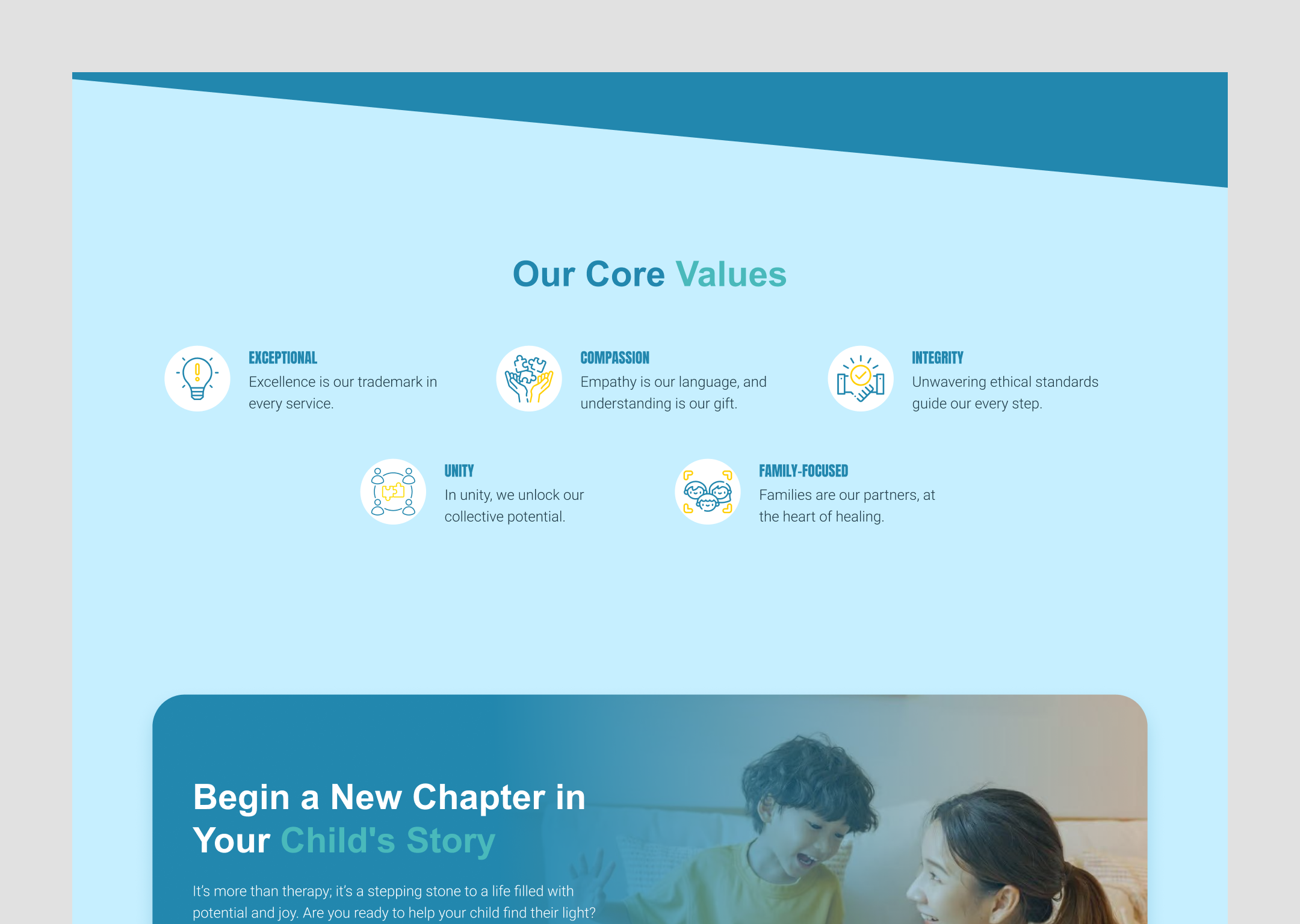
Values as Emotional Promises: The core values section wasn't corporate boilerplate—it was a series of emotional commitments. "Compassion: Empathy is our language, and understanding is our gift" and "Family-Focused: Families are our partners, at the heart of healing" reinforced that ChildBuilders saw families as whole people with emotions, not just clients with needs.
The design was crafted to visually reinforce warmth, approachability, and hope while maintaining the professionalism required in healthcare contexts.
Soft, Calming Aesthetic: The visual approach departed from typical medical site design (cold blues, stark whites) in favor of a warm, gentle palette. We used soft pastels, light neutrals, and organic shapes to create an environment that felt nurturing rather than clinical. This wasn't arbitrary—it was designed to reduce the visual stress that anxious parents already carry.
Human-Centered Photography: We emphasized authentic imagery showing real children engaged in activities, families interacting positively with therapists, and moments of genuine connection. These weren't stock photos of generic "autism therapy"—they were carefully selected images that showed progress, joy, and the human relationships at the core of ABA work. This visual storytelling reinforced the emotional promise the copy made.
Generous White Space: Given the emotional weight of the decision parents were making, we used ample white space throughout the design to prevent visual overwhelm. Each section had room to breathe, allowing parents to process information at their own pace without feeling rushed or bombarded.
Clear Visual Hierarchy for Anxious Minds: We recognized that parents researching ABA therapy were often in a heightened emotional state. The design used clear, intuitive navigation, large, legible typography, and distinct section breaks to reduce cognitive load. Important information like contact details, service locations, and CTAs were always visible and easy to find.
Progressive Disclosure of Complexity: The design revealed information gradually. The homepage presented the emotional core (you're not alone, we understand, your child matters), then gently introduced services, process, and finally practical details. This prevented information overload while building confidence through each scroll.
Accessibility as Standard: We implemented high-contrast text for readability, intuitive navigation patterns, and mobile-optimized layouts. Recognizing that many parents would be researching on their phones during stolen moments (waiting rooms, after bedtime), we ensured the mobile experience was seamless.
Soft CTAs That Invite, Not Demand: Call-to-action buttons used gentle, inviting language ("Let's Get Started," "Apply for Services," "Learn More About Us") rather than aggressive sales terminology. Button styling was prominent but not jarring—easy to find but never pushy.
Visual Consistency Across Regional Pages: As ChildBuilders expanded across Rhode Island, Massachusetts, and New Hampshire, we maintained visual and messaging consistency across location-specific pages while customizing for regional relevance. This ensured families in different states received the same quality of information and emotional support.
Icons and Visual Metaphors: We used thoughtful iconography to represent abstract concepts—a growing plant for development, connected hands for family involvement, stepping stones for progress. These visual metaphors made complex therapeutic concepts immediately understandable and emotionally resonant.
Through this emotionally intelligent content strategy and warmly professional design approach, we successfully positioned ChildBuilders ABA as more than a therapy provider—we established them as a compassionate partner in one of the most challenging journeys a family can face. The result is a digital platform that doesn't just inform anxious parents—it understands them, reassures them, and empowers them to take the first step toward help.